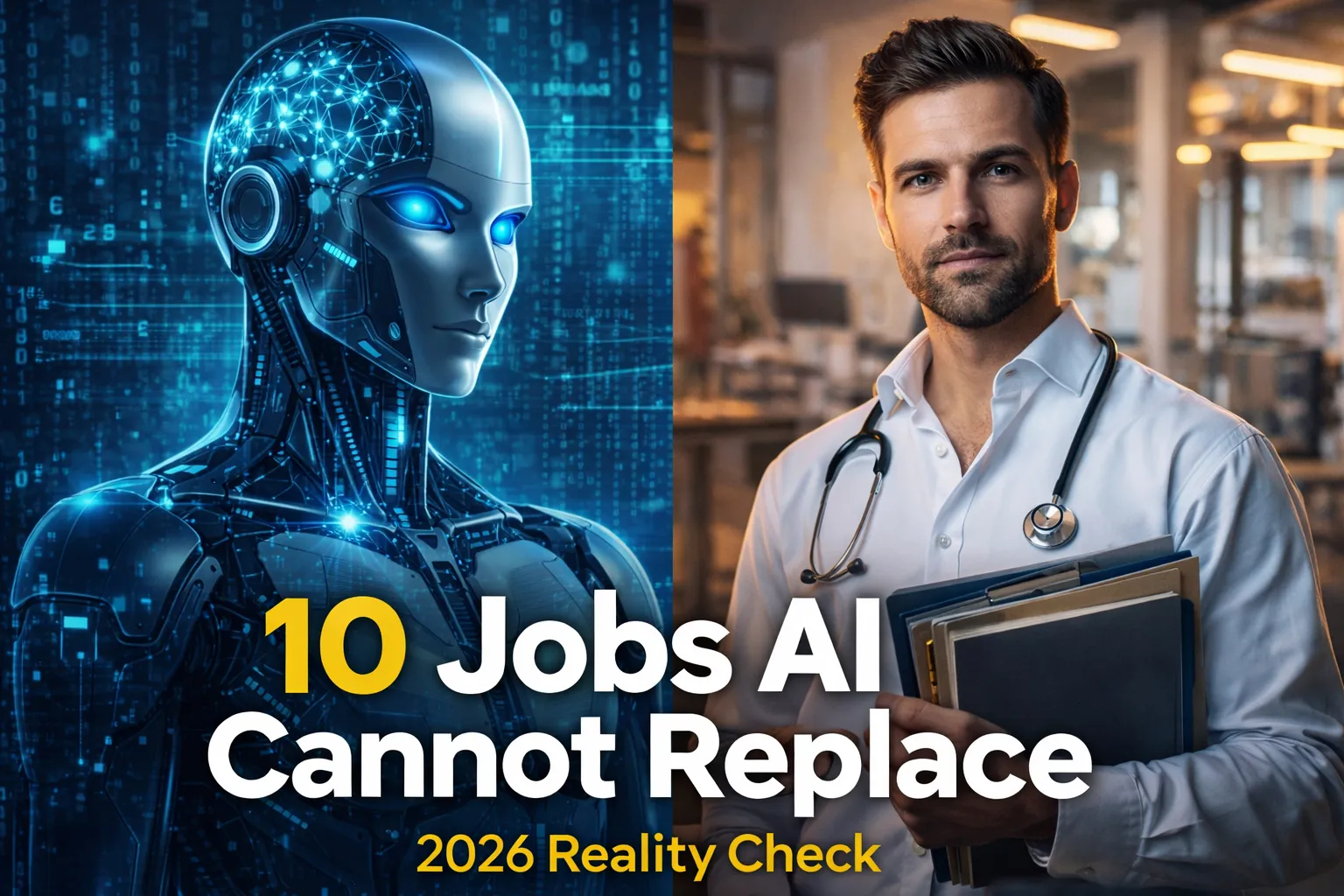
Artificial Intelligence is transforming industries faster than ever in 2026. From automated customer service to AI-powered coding tools, machines are now capable of performing tasks that once required human expertise. As explained in our analysis of AI tools shaping the future of work, businesses across sectors are rapidly integrating automation into daily operations.
But here’s the real question: Will AI replace all jobs in the next 10 years?
The short answer is no.
While AI is excellent at automation and data processing, it still struggles with emotional intelligence, ethical reasoning, unpredictable environments, and deep human creativity.
In this complete 2026 reality check, we’ll explore which jobs AI cannot replace, why automation happens, what problems it causes, and how you can future-proof your career.
Table of Contents
- 1. AI vs Human Jobs: The 2026 Reality
- 2. How AI Replaces Tasks (Not Entire Jobs)
- 3. Why Job Automation Is Increasing Rapidly
- 4. Economic & Career Impact of AI Replacement
- 5. Jobs Most at Risk in the Next 10 Years
- 6. Why Humans Still Have the Advantage
- 7. 10 Jobs AI Cannot Replace in the Next Decade
- 8. New Jobs Created Because of AI
- 9. Skills That Make You AI-Proof
- 10. Smart Career Strategy for 2026–2036
- 11. AI Impact: India vs Global Job Market
- 12. Final Verdict: Should You Be Worried About AI?
1. Overview: AI vs Human Jobs in 2026
Artificial Intelligence is advancing at an unprecedented pace in 2026. From automated customer service systems to AI-powered coding assistants and advanced data analytics tools, machines are now capable of handling tasks that once required human effort.
Many businesses are integrating AI to improve efficiency, reduce costs, and speed up decision-making. As explained in our detailed guide on AI tools shaping the future of work, automation is no longer optional — it’s becoming a competitive necessity.
However, it’s important to understand how AI actually works. Most AI systems operate based on:
- Large datasets for training and pattern detection
- Pattern recognition to predict outcomes
- Probability-based decisions rather than real understanding
- Rule-based automation for repetitive tasks
Despite its intelligence, AI does not possess:
- True emotional intelligence
- Ethical reasoning and moral judgment
- Deep human empathy
- Creative intuition beyond learned data
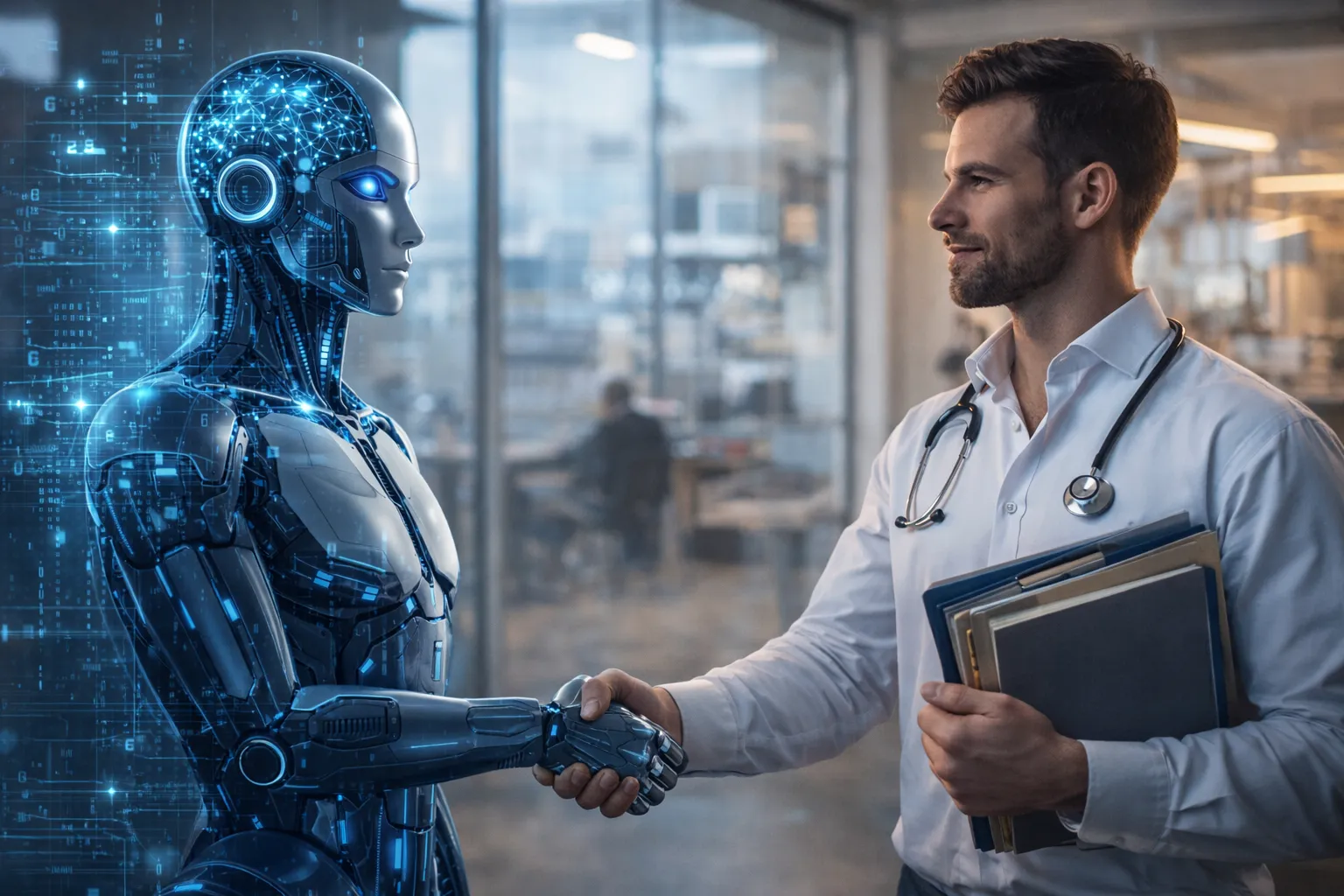
This distinction is critical. AI replaces repetitive tasks — not complex human roles that require empathy, leadership, and adaptability. The real shift in 2026 is not “AI vs humans,” but rather “AI working alongside humans.” Professionals who learn to combine technology with human-centered skills will remain highly valuable in the evolving job market.
2. How AI Actually Replaces Jobs

One of the biggest misconceptions about artificial intelligence is that it replaces entire professions overnight. In reality, AI replaces specific tasks within a job — not the whole role at once.
AI systems are designed to automate structured, repeatable, and data-driven activities. These tasks typically follow clear rules and patterns, making them easier for machines to handle.
For example:
- AI can draft routine emails and summaries.
- AI can generate financial or performance reports.
- AI chatbots can automate basic customer support queries.
- AI tools can analyze large volumes of financial or business data.
Many professionals already use AI tools to improve efficiency. If you're curious how this works in practice, explore our step-by-step guide on how to use ChatGPT for daily productivity.
However, full job replacement only happens when roles are:
- Highly repetitive
- Rule-based and predictable
- Dependent on structured data
- Low in emotional or creative decision-making
Jobs that require empathy, complex judgment, leadership, or physical adaptability are much harder to automate. This is why AI is best viewed as a productivity amplifier rather than a complete workforce substitute. The smartest professionals in 2026 are not competing with AI — they are learning how to use it strategically.
3. Why Job Automation Is Increasing Rapidly
Job automation is accelerating in 2026 because businesses are under constant pressure to improve efficiency, reduce costs, and stay competitive. Artificial Intelligence is no longer experimental — it is becoming a core business tool across industries.
Several key factors are driving the rapid growth of AI-powered automation:
- Cost Reduction: AI systems can operate 24/7 without salaries, benefits, or downtime.
- Speed & Efficiency: Machines process data faster than humans.
- Accuracy: Automated systems reduce human error in repetitive tasks.
- Scalability: Businesses can scale operations without hiring large teams.
According to emerging technology patterns discussed in our Tech Trends 2025 guide, automation is expanding across sectors such as finance, customer support, logistics, healthcare diagnostics, and even content creation.
Another major reason automation is increasing is the improvement in AI tools themselves. Modern AI models can understand language, generate content, analyze complex datasets, and assist with coding — making them valuable across departments.
However, automation growth does not automatically mean mass unemployment. Instead, it signals a shift in required skills. As repetitive tasks become automated, demand increases for roles involving strategy, creativity, emotional intelligence, and decision-making.
The rise of automation is not about replacing humans entirely — it’s about transforming how work is done in the modern economy.
4. Economic & Career Impact of AI Replacement
The rise of AI-driven automation is reshaping both the global economy and individual career paths. While Artificial Intelligence improves productivity and reduces operational costs, it also changes how companies hire, train, and structure their workforce.
From an economic perspective, AI replacement creates both opportunities and challenges:
- Increased Productivity: Businesses can produce more with fewer resources.
- Cost Efficiency: Automation reduces long-term labor expenses.
- New Industry Growth: AI development, data science, and cybersecurity roles are expanding.
- Workforce Displacement: Routine and repetitive jobs face higher risk.
On a career level, the impact is even more personal. Professionals in data-driven or rule-based roles may need to upgrade their skills to remain competitive. At the same time, demand is rising for individuals who can combine technical knowledge with human strengths such as leadership and creativity.
The key takeaway for 2026 and beyond is clear: careers that rely solely on repetitive processes are vulnerable, but those built around problem-solving, emotional intelligence, and strategic thinking are becoming more valuable. Adapting early can turn AI disruption into long-term opportunity.
5. Jobs Most at Risk in the Next 10 Years
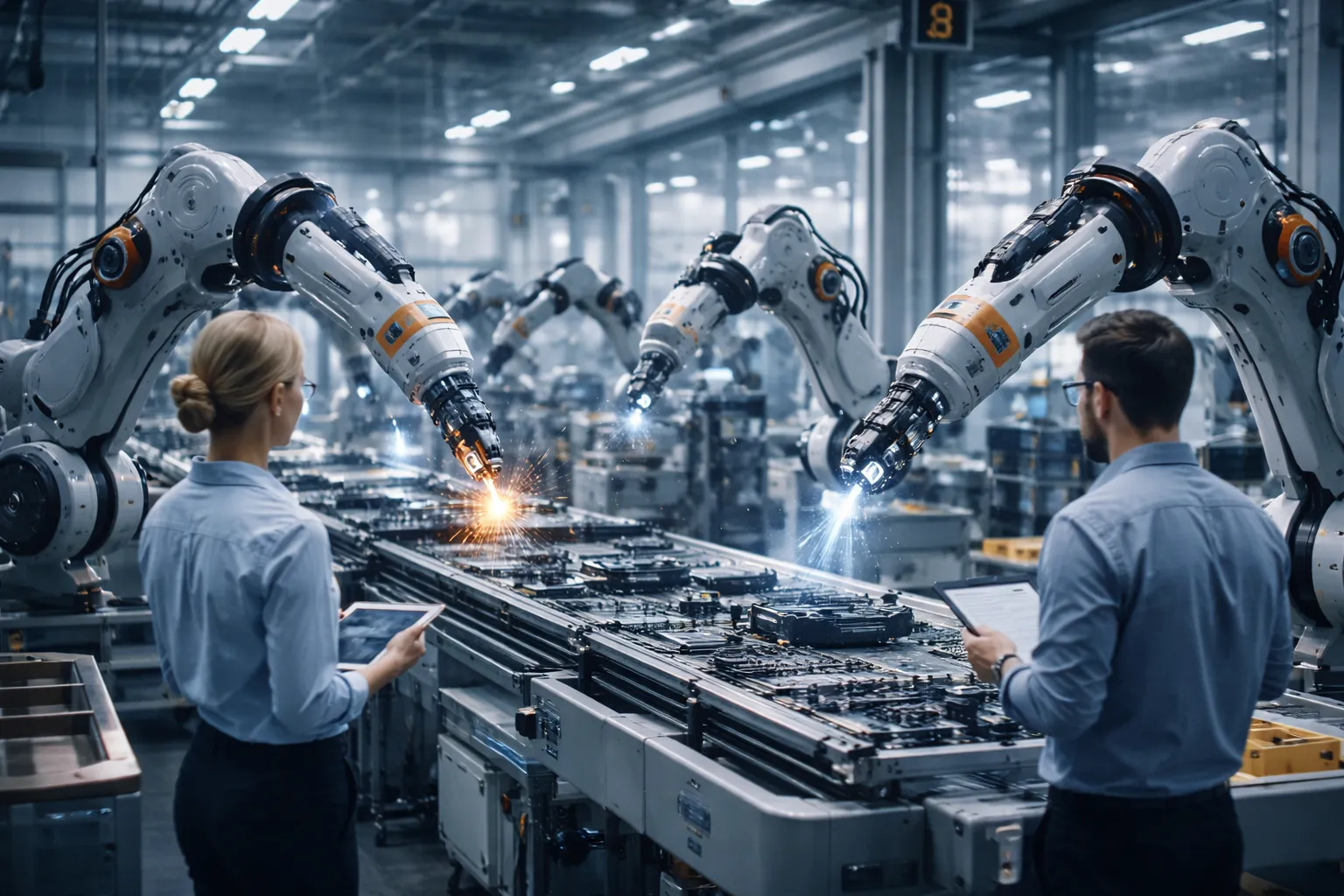
As Artificial Intelligence continues to evolve, certain jobs are more vulnerable to automation than others. The key risk factor is not the job title itself — but the type of tasks involved. Roles that rely heavily on repetitive, rule-based, and predictable processes are the most exposed.
Here are some job categories most at risk in the next decade:
- Data Entry & Clerical Work: AI systems can process and organize structured data faster and more accurately.
- Basic Customer Support: Chatbots now handle common queries without human intervention.
- Telemarketing & Sales Calling: Automated outreach systems are replacing manual calling processes.
- Routine Manufacturing Roles: Robotics and automation already dominate assembly lines.
- Basic Content Generation: AI writing tools can create simple articles, summaries, and reports.
However, “at risk” does not mean “guaranteed replacement.” Many of these roles are evolving rather than disappearing. Workers who upskill, learn AI tools, and move toward analytical or strategic responsibilities can transition into higher-value positions.
The next 10 years will reward adaptability. Jobs centered purely on repetition may decline, but careers built on creativity, leadership, and human interaction will remain resilient.
6. Why Humans Still Have the Advantage
Despite rapid advancements in Artificial Intelligence, humans still hold a significant advantage in many critical areas. AI is powerful at processing data and recognizing patterns, but it does not truly understand context, emotions, or ethics the way humans do.
Here’s where humans continue to outperform AI:
- Emotional Intelligence: Empathy, trust-building, and relationship management remain deeply human skills.
- Ethical Decision-Making: Complex moral judgments require cultural awareness and values.
- Creative Thinking: Original ideas and innovation go beyond pattern-based generation.
- Adaptability: Humans can respond to unpredictable real-world situations.
- Leadership & Influence: Inspiring teams and managing conflict require human presence.
Moreover, emerging technology trends discussed in our Tech Trends 2025 guide highlight a clear pattern: the future favors professionals who combine technical knowledge with strong human-centered skills.
The real competitive advantage in 2026 is not avoiding AI — it is mastering it while strengthening uniquely human abilities. In the long run, collaboration between humans and AI will create more opportunities than competition ever could.
4. Why AI Job Replacement Is a Serious Concern
Automation can cause:
- Workforce displacement
- Skill mismatch
- Economic inequality
- Dependence on technology systems
However, history shows new technology also creates new job categories.
5. Industries Most at Risk from AI
- Data entry & clerical work
- Basic customer support
- Telemarketing
- Repetitive manufacturing
- Basic content writing
Even content creation is evolving due to AI chat apps. Explore the latest options in our guide on top free AI chat apps.
6. 10 Jobs AI Cannot Replace in the Next 10 Years

While AI is transforming industries, certain careers remain highly resistant to automation. These roles require emotional intelligence, ethical reasoning, complex decision-making, and real-world adaptability — areas where machines still struggle.
Below are 10 jobs AI cannot fully replace in the next decade:
6.1 Doctors & Surgeons
AI can assist in diagnosis and medical imaging, but complex surgeries, ethical decisions, and patient empathy require human expertise.
6.2 Psychologists & Therapists
Mental health support depends on trust, emotional understanding, and human connection that AI cannot genuinely replicate.
6.3 Skilled Trades (Electricians, Plumbers, Mechanics)
These jobs involve hands-on work in unpredictable physical environments, limiting automation potential.
6.4 Teachers & Educators
AI tools support learning, but mentorship, classroom management, and inspiration remain human strengths.
6.5 Creative Directors & Strategic Thinkers
AI generates ideas based on data, but original vision and cultural intuition come from human creativity.
6.6 Entrepreneurs & Business Leaders
Risk assessment, strategic leadership, and decision-making under uncertainty are deeply human traits.
6.7 Lawyers & Judges
Legal interpretation requires contextual understanding, ethical reasoning, and moral judgment beyond algorithms.
6.8 Emergency Responders
Police officers, firefighters, and paramedics operate in high-risk, unpredictable situations.
6.9 HR & Relationship Managers
Hiring decisions and workplace conflict resolution demand emotional intelligence.
6.10 AI Trainers & Ethics Specialists
Interestingly, AI creates new roles that require humans to train, regulate, and monitor intelligent systems.
As explained in our analysis of AI tools shaping the future of work, the safest careers combine technical awareness with uniquely human skills.
8. New Jobs Created Because of AI
While Artificial Intelligence is automating repetitive tasks, it is also creating entirely new career opportunities. Every major technological shift in history has generated new industries — and AI is no different.
Instead of focusing only on job loss, it’s important to understand the new roles emerging because of AI innovation.
Here are some fast-growing AI-driven careers:
- AI Engineers & Machine Learning Specialists: Professionals who design, train, and optimize AI systems.
- Data Scientists & Analysts: Experts who interpret complex data to support business decisions.
- AI Trainers: Individuals who help improve AI responses and accuracy.
- AI Ethics & Compliance Officers: Specialists ensuring responsible and fair AI usage.
- Prompt Engineers: Professionals skilled at guiding AI tools to generate high-quality outputs.
- Automation Consultants: Advisors who help companies integrate AI solutions efficiently.
The key takeaway for 2026 and beyond is clear: AI does not just replace jobs — it transforms them and creates new career paths. Professionals who upskill in technology, data, and problem-solving will find themselves at the center of this new digital economy.
The future job market belongs to those who adapt early and align their skills with AI-driven innovation.
7. Skills That Make You AI-Proof
In an AI-driven world, job security is no longer about avoiding technology — it’s about developing skills that machines cannot easily replicate. While Artificial Intelligence excels at automation and data processing, it still struggles with complex human abilities.
To stay competitive in 2026 and beyond, focus on building the following AI-proof skills:
- Critical Thinking: The ability to analyze situations, evaluate risks, and make strategic decisions.
- Emotional Intelligence: Understanding human behavior, empathy, and relationship-building.
- Creative Problem Solving: Generating innovative solutions beyond predictable patterns.
- Leadership Ability: Inspiring teams, managing conflict, and driving vision.
- Adaptability: Learning new tools and adjusting to technological shifts quickly.
- Hybrid Technical + Soft Skills: Combining AI knowledge with communication and strategic thinking.
Technical awareness is especially important. Professionals who understand how AI tools work can use them to increase productivity rather than compete against them. For example, learning how to use ChatGPT for daily productivity helps you automate routine tasks while focusing on higher-value work.
The future belongs to individuals who combine human intelligence with technological fluency. Instead of fearing automation, the smarter strategy is to upgrade your skills and position yourself as someone who can work alongside AI — not be replaced by it.
10. Smart Career Strategy for 2026–2036

The next decade will not be about AI replacing humans — it will be about professionals who know how to adapt. A smart career strategy for 2026–2036 focuses on combining technology awareness with strong human-centered skills.
Here’s a practical roadmap to stay ahead in the AI era:
- Learn AI Tools Early: Understand how automation works and use it to improve productivity instead of resisting it.
- Upgrade Continuously: Invest in upskilling every year as technology evolves.
- Move Toward Strategy-Based Roles: Focus on decision-making, leadership, and creative planning.
- Strengthen Soft Skills: Communication, emotional intelligence, and problem-solving are long-term advantages.
- Build a Hybrid Profile: Combine technical knowledge with business or creative expertise.
The smartest professionals between 2026 and 2036 will not compete against AI. They will position themselves as leaders who manage, guide, and enhance AI systems. The future belongs to adaptable learners who continuously evolve with technology.
11. AI Impact: India vs Global Job Market
The impact of Artificial Intelligence on jobs is not uniform across the world. While AI adoption is accelerating globally, the way it affects India compared to developed economies differs due to workforce structure, technology adoption, and industry focus.
In Global Markets (US, Europe, Japan):
- Higher automation in manufacturing and logistics.
- Strong investment in AI research and development.
- Faster replacement of repetitive white-collar roles.
- Growing demand for AI engineers and data scientists.
In India:
- Large service-based workforce (IT, BPO, customer support).
- Gradual automation in banking, telecom, and e-commerce.
- Rising demand for AI-skilled professionals.
- Slower replacement in labor-intensive and informal sectors.
The key difference is speed. Developed markets may automate faster, while India may experience a gradual shift with strong opportunities for upskilled professionals. In both cases, adaptability and continuous learning remain the ultimate job security.
9. Final Verdict: Should You Be Worried?
The short answer: No — but you should be prepared.
Artificial Intelligence will continue to replace repetitive, rule-based tasks. However, it is not replacing human intelligence, creativity, or emotional depth. The real shift happening in 2026 is job transformation — not total job elimination.
Here’s what the next 10 years are likely to reward:
- Adaptable professionals who learn new tools quickly
- Hybrid skill sets combining technology and soft skills
- Strategic thinkers who make complex decisions
- Leaders who can manage AI systems effectively
As discussed in our breakdown of AI tools shaping the future of work, the professionals who thrive will be those who treat AI as a productivity partner rather than a competitor.
Instead of fearing automation, the smarter move is to understand it. Learning practical applications — such as in our guide on how to use ChatGPT for daily productivity — can immediately improve efficiency and future-proof your career.
The future belongs to humans who can collaborate with intelligent systems. If you continuously upskill, strengthen your uniquely human abilities, and stay informed about emerging tech trends, AI becomes an opportunity — not a threat.
In 2026 and beyond, success is not about avoiding AI. It’s about mastering it.