What Is 5G+ Technology? Explained Simply (2025 Edition)
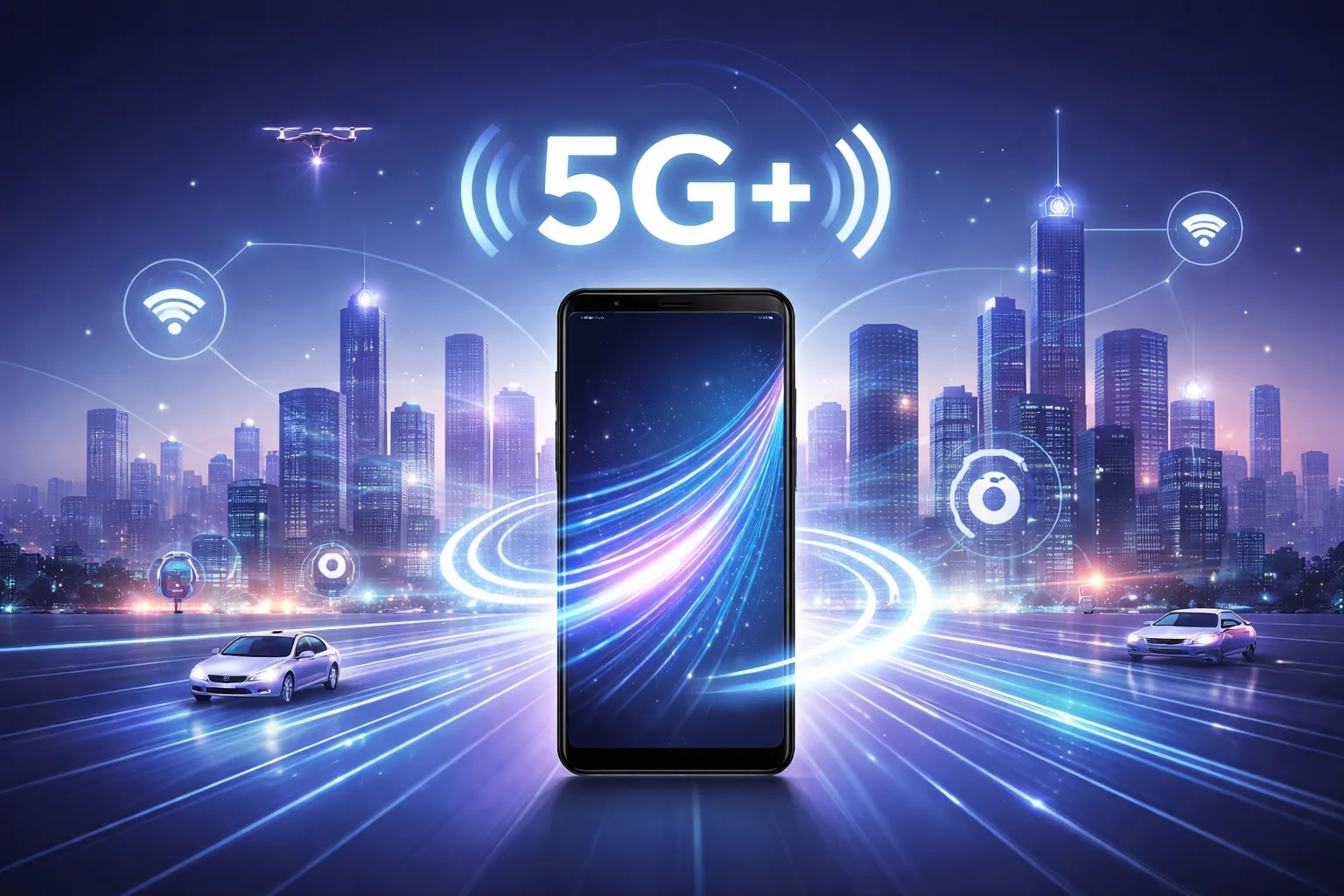
If you’ve come across the term 5G+ technology and wondered how it is different from normal 5G, you’re not alone. In 2025, telecom companies are actively promoting 5G+ as the next evolution of mobile internet, promising ultra-fast speeds, near-zero latency, and stronger performance in crowded areas.
This guide explains 5G+ in simple language, with real-life examples, comparisons, benefits, limitations, and future use cases. This article is part of our Tech Explainer Cluster. For a complete overview of all major innovations shaping smartphones, networks, and digital infrastructure, visit our central hub:
Tech Trends 2025 – Technology Hub
Table of Contents
- 1. What Is 5G+ Technology?
- 2. Why 5G+ Was Needed
- 3. How 5G+ Works
- 4. 5G vs 5G+: Detailed Comparison
- 5. Real-Life Examples of 5G+
- 6. Key Benefits of 5G+
- 7. Limitations of 5G+
- 8. 5G+ Availability in India & Globally
- 9. Does Your Phone Support 5G+?
- 10. Future Use Cases of 5G+
- 11. Is 5G+ Safe for Humans?
- 12. Final Thoughts
1. What Is 5G+ Technology?
5G+ is not a completely new network generation like 4G or 5G. Instead, it is an enhanced version of standard 5G that uses advanced spectrum bands, smarter antennas, and improved network architecture to deliver significantly better performance.
While basic 5G often relies on low-band or mid-band frequencies, 5G+ combines:
- mmWave (millimeter wave) for ultra-high speeds
- C-band spectrum for balanced speed and coverage
- Carrier aggregation to merge multiple frequency bands
- Advanced Massive MIMO for handling heavy traffic
In simple terms, 5G+ means faster, smoother, and more reliable 5G, especially in cities and crowded environments.
2. Why 5G+ Was Needed
Although 5G brought noticeable improvements over 4G, real-world usage revealed several challenges:
- Network congestion in crowded areas
- Inconsistent speeds depending on location
- Limited low-latency support for advanced applications
5G+ was introduced to solve these issues. As more devices connect to mobile networks—smartphones, smart TVs, IoT devices, cars, and wearables—networks need higher capacity and smarter traffic management.
3. How Does 5G+ Work?
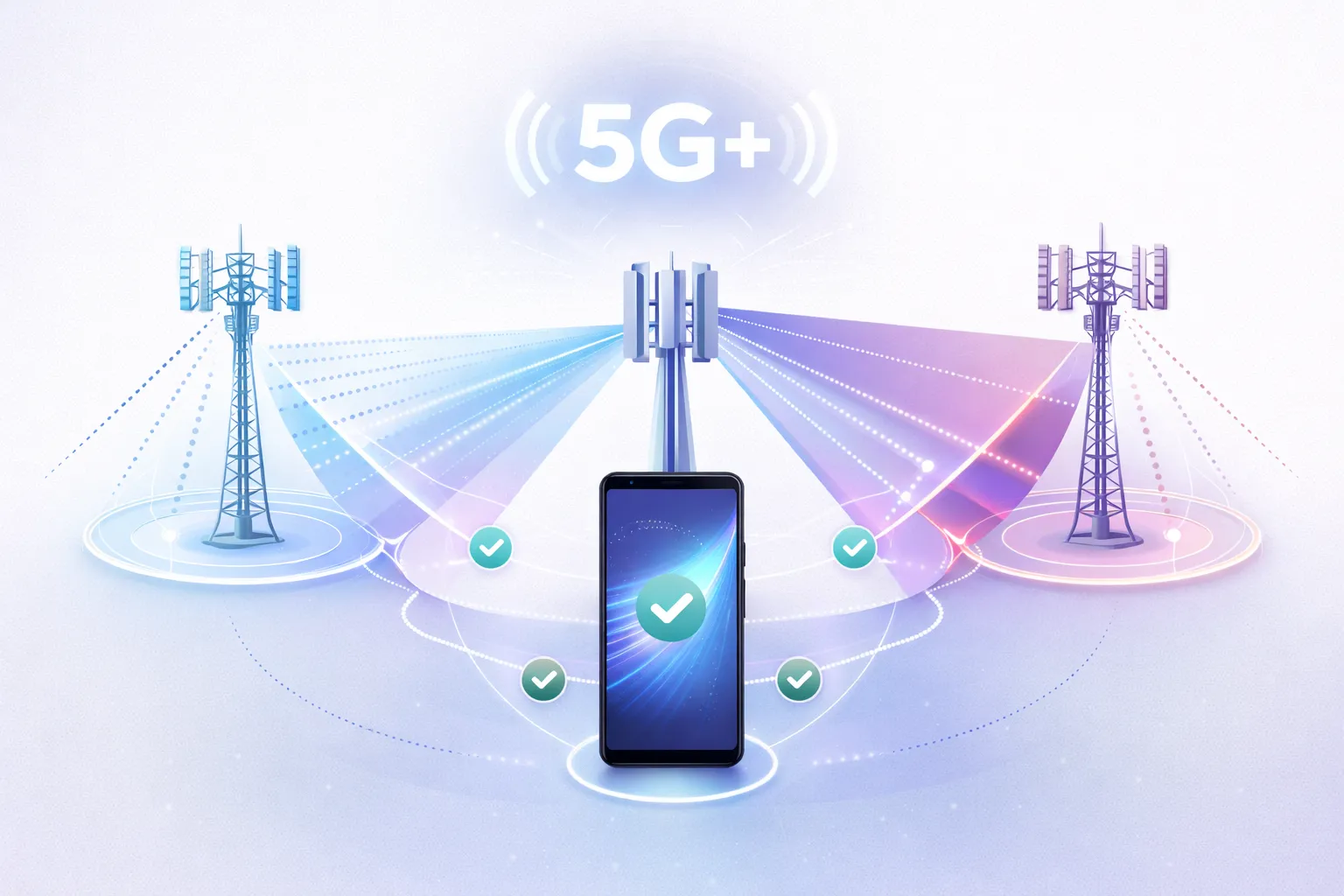
5G+ works by combining multiple advanced technologies into a single network experience:
mmWave Spectrum
Millimeter waves operate at very high frequencies, allowing speeds up to 10 Gbps. However, their range is short, making them ideal for stadiums, malls, airports, and business districts.
Carrier Aggregation
This technology combines multiple frequency bands into one connection, increasing speed and stability.
Massive MIMO
Massive Multiple-Input Multiple-Output systems use dozens of antennas to communicate with many devices simultaneously.
Beamforming
Instead of broadcasting signals everywhere, beamforming directs data precisely toward connected devices.
These networking techniques are similar to how modern wireless standards work. To understand how mobile networks compare with home internet technologies, read our detailed guide on Wi-Fi 6 vs Wi-Fi 6E vs Wi-Fi 7 .
4. 5G vs 5G+: What’s the Difference?
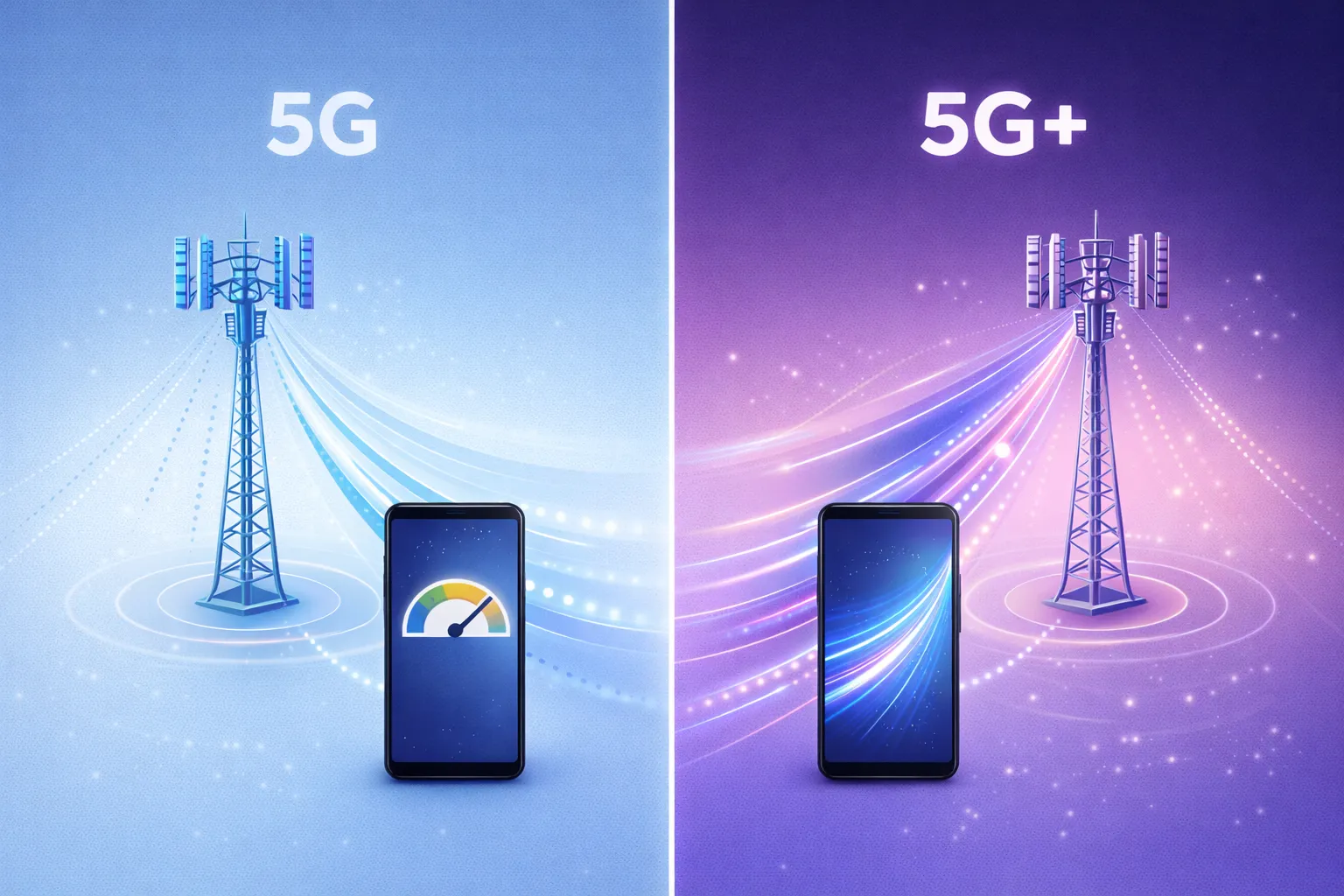
| Feature | 5G | 5G+ |
|---|---|---|
| Speed | 100–600 Mbps | 1–10 Gbps |
| Latency | 10–20 ms | 1–5 ms |
| Crowded Areas | Performance drops | Stable performance |
| Best For | Daily browsing | Gaming, AR/VR, live streaming |
5. Real-Life Examples of 5G+
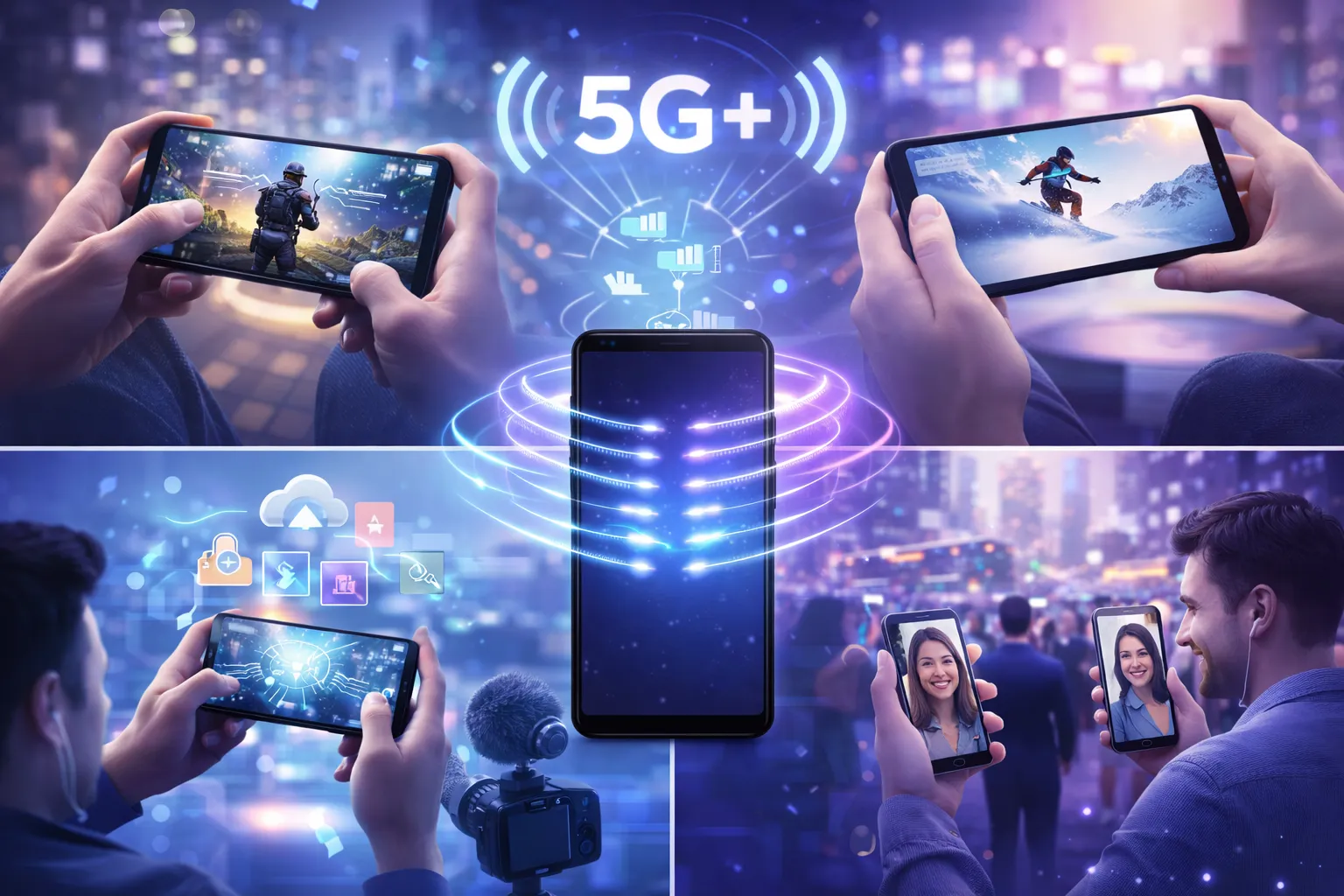
- Downloading a 4K movie in seconds
- Lag-free cloud gaming on mobile
- High-quality video calls in crowded places
- Instant file uploads for content creators
6. Key Benefits of 5G+ Technology
Ultra-Fast Speeds
Perfect for heavy downloads, live streaming, and professional work.
Low Latency
Essential for gaming, AR/VR, and real-time collaboration.
Better Network Reliability
Maintains performance even during peak usage.
However, faster networks can increase device workload. If your phone heats up during heavy usage, this guide explains why phones overheat and how to fix it .
7. Limitations of 5G+
- Limited coverage outside major cities
- Higher battery consumption
- Requires compatible devices
8. 5G+ Availability in 2025
In 2025, 5G+ is expanding across major metro cities. In India, operators like Jio and Airtel are gradually upgrading infrastructure.
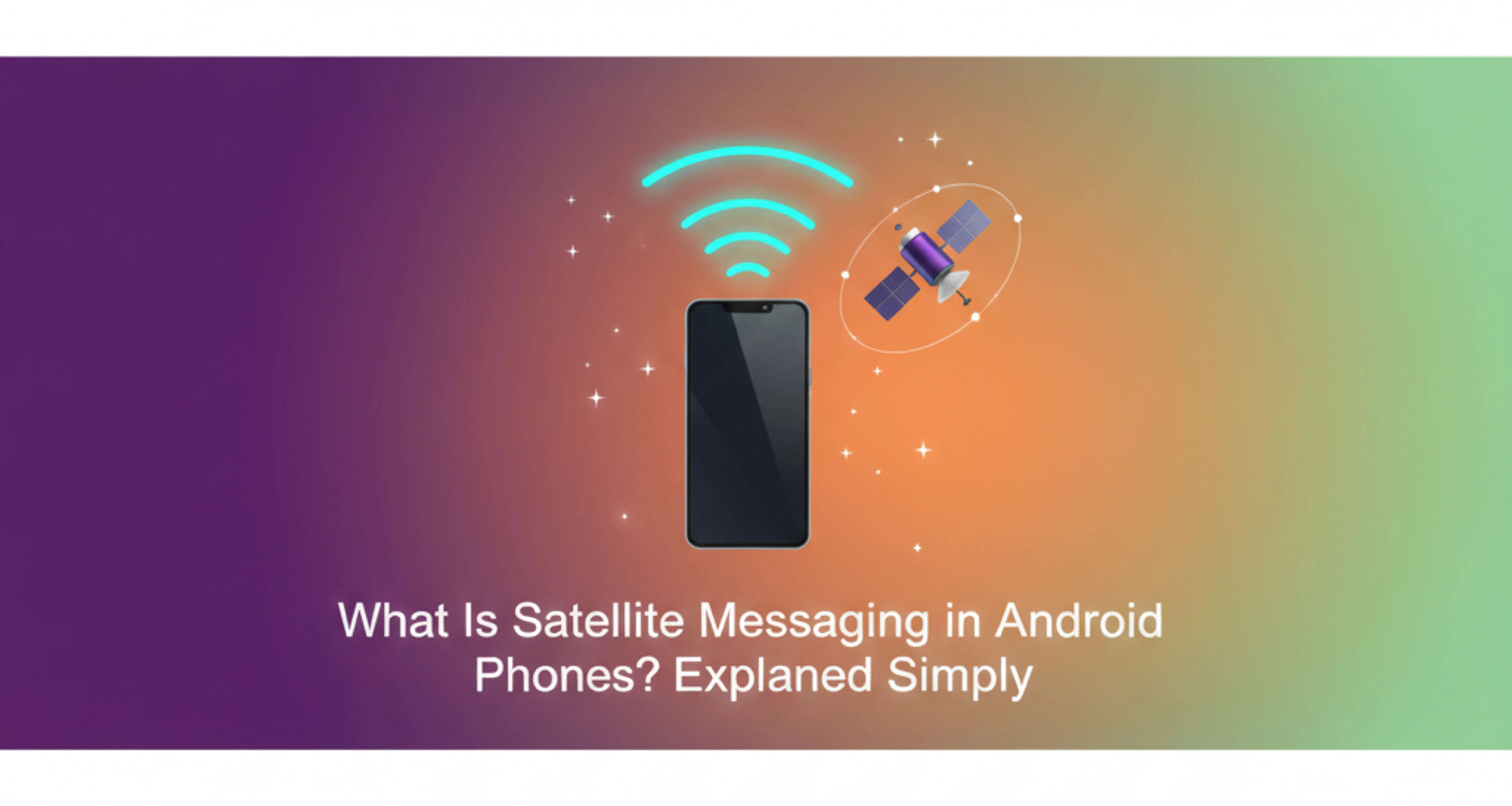
Alongside 5G+, telecom companies are also experimenting with satellite connectivity in smartphones , especially for remote and emergency coverage.
9. Does Your Phone Support 5G+?
- iPhone 13 and newer
- Samsung Galaxy S22–S25
- Google Pixel 6+
- OnePlus 10 series and above
10. Future Use Cases of 5G+
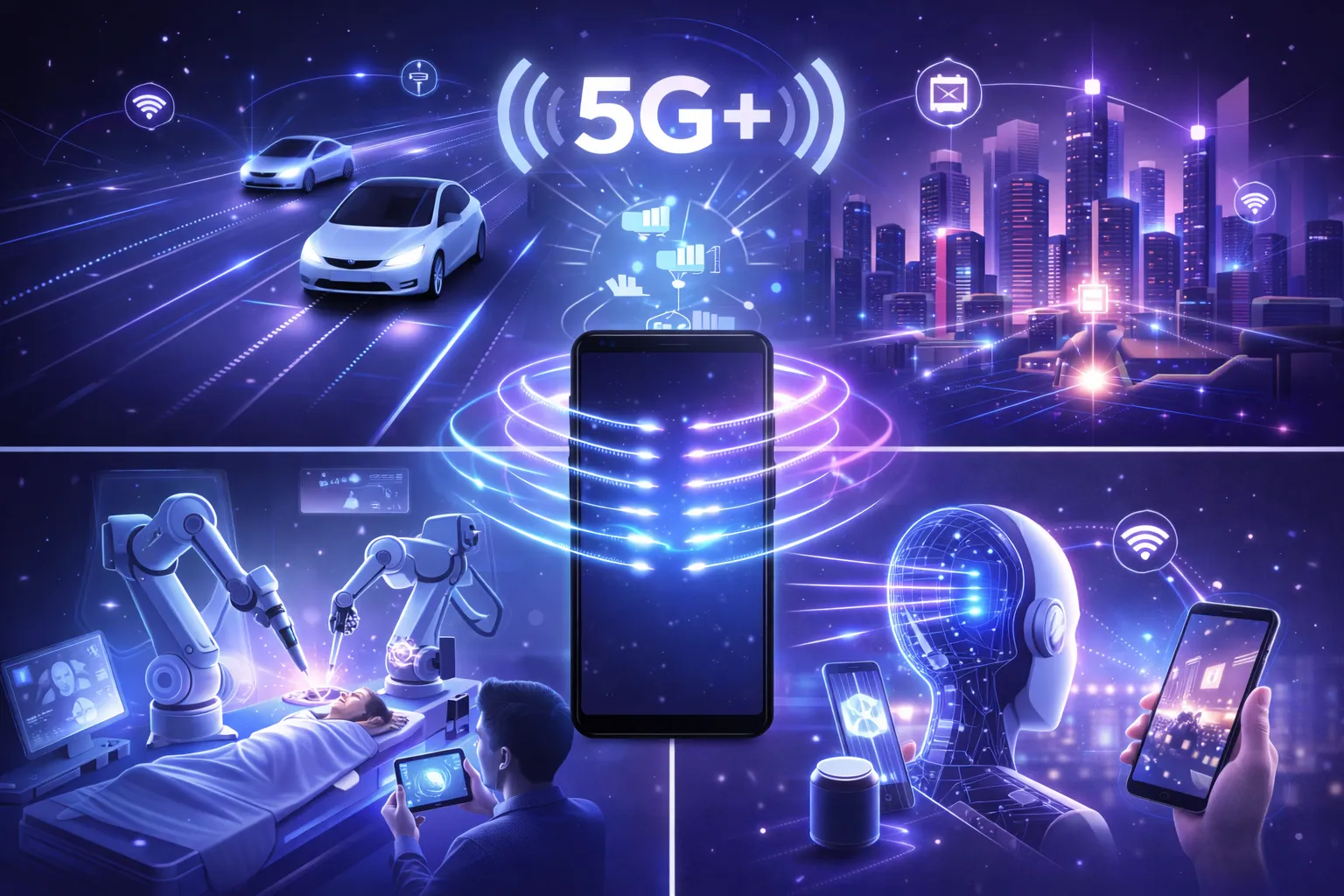
- Autonomous vehicles
- Remote surgery
- Smart cities
- AI-powered mobile apps
These innovations connect closely with emerging technologies like AI, smart infrastructure, electric vehicles, and next-gen networks. For a broader view of how 5G+ fits into the future digital ecosystem, explore our complete Tech Trends 2025 guide.
11. Is 5G+ Safe?
Yes. 5G+ operates within international safety guidelines and uses non-ionizing radiation similar to Wi-Fi.
12.Final Thoughts
5G+ technology represents a major leap in mobile connectivity. It bridges the gap between current 5G networks and future 6G innovations.
To understand how 5G+, satellite connectivity, Wi-Fi 7, cloud computing, and AI technologies fit together, explore our complete Tech Trends 2025 guide.